Why Do Crohn's Disease Symptoms Keep Coming Back?
Introduction
If you’ve been living with Crohn’s disease, you already know the drill: you have a stretch of good days, maybe even weeks, where life feels almost normal. And then, out of nowhere, the pain, the fatigue, and the bathroom urgency return. It’s exhausting. And confusing.
So why does Crohn’s disease keep coming back, even after treatment? Let’s talk about it honestly.
What Is Crohn's Disease, Really?
Crohn’s disease is a type of inflammatory bowel disease (IBD), a condition where the immune system mistakenly attacks the lining of the digestive tract, causing chronic inflammation. It can affect any part of the gut, from the mouth all the way to the large intestine.
Unlike a stomach infection that clears up with antibiotics, Crohn’s disease is a long-term condition. It doesn’t get “cured”; it gets managed. And that distinction matters enormously when understanding why symptoms come and go.
Flare-Ups: Why They Happen
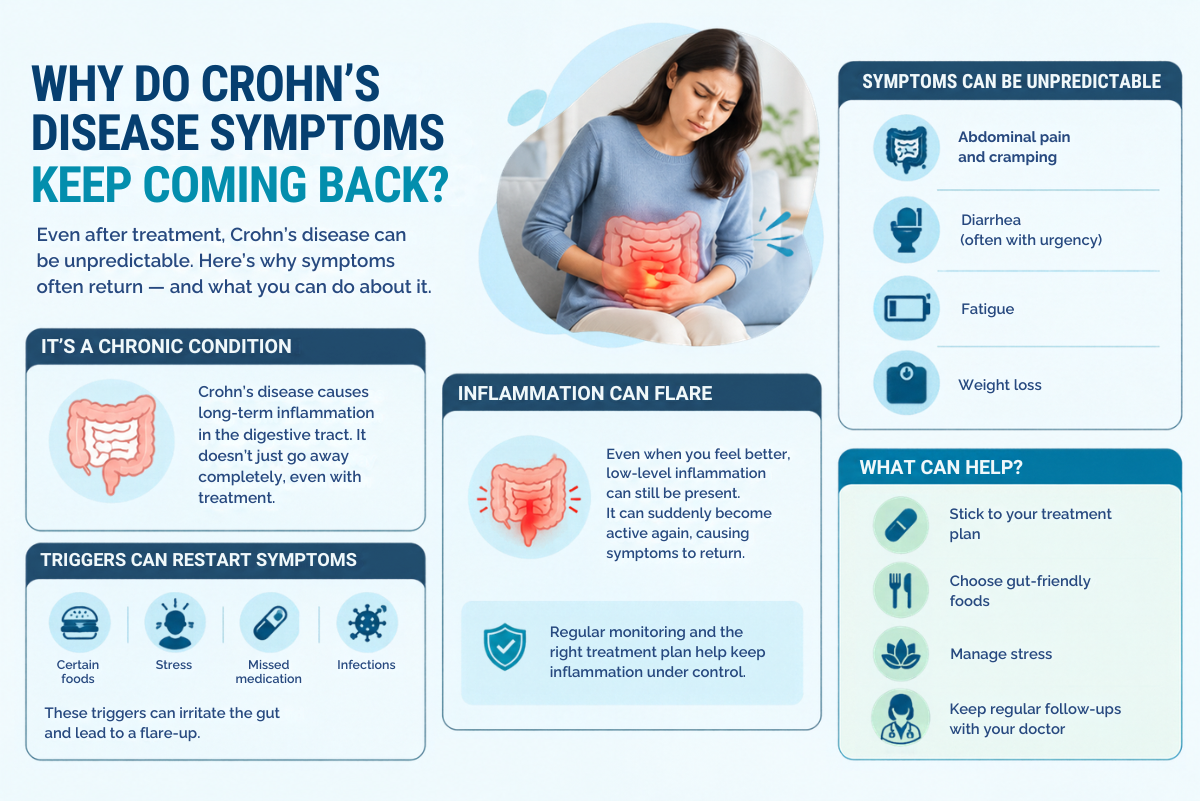
The cycle of symptoms appearing, calming down, and returning is called flare-ups and remission. During remission, inflammation is under control. During a flare-up, it comes roaring back.
Here’s what commonly triggers a return of Crohn’s disease symptoms:
Stress — The gut-brain connection is real. Emotional stress, work pressure, or personal anxiety can directly trigger inflammation in the digestive tract.
Dietary choices — Spicy food, high-fat meals, dairy, or raw vegetables can aggravate an already sensitive gut. What causes a flare in one person may be perfectly fine for another.
Infections — A simple gut infection or even a viral illness can set off an immune response that wakes up dormant inflammation.
Stopping or missing medication — This is one of the most common reasons symptoms return. Many patients feel better during remission and assume they no longer need their medicines. That’s rarely the right call.
NSAIDs and antibiotics — Certain common painkillers and antibiotics can disturb the gut lining and microbiome, triggering a relapse.
The Immune System's Unpredictable Role
Here’s what makes Crohn’s disease especially tricky: even when you’re doing everything right, the immune system can still behave unpredictably. Crohn’s is fundamentally an immune-mediated condition, meaning the body’s own defence system is the source of the problem.
Over time, the body may also build resistance to certain medications, making previously effective treatments less reliable. This is why regular monitoring and follow-ups with your gastroenterologist are non-negotiable, not optional.
Can You Prevent Flare-Ups Completely?
Not always, but you can significantly reduce their frequency and severity. The most important steps include:
- Taking your prescribed medication consistently, even when symptoms have settled
- Identifying and avoiding personal food triggers through a symptom diary
- Managing stress actively, through yoga, walking, therapy, or breathing exercises
- Getting regular check-ups to catch early signs of inflammation before they escalate
- Not self-medicating with painkillers that could irritate the gut
It’s also worth noting that smoking is a well-documented trigger for Crohn’s flare-ups. If you smoke, quitting is one of the most impactful decisions you can make for your gut health.
What Happens If Flare-Ups Are Left Unmanaged?
Ignoring flare-ups doesn’t make them go away; it often makes them worse. Repeated uncontrolled inflammation can lead to complications like strictures (narrowing of the intestine), fistulas (abnormal connections between organs), or abscesses, which may eventually require surgical intervention.
Dr. Harshad Joshi, who regularly sees patients managing long-term gut conditions, notes that many complications from Crohn’s disease are preventable when patients stay consistent with their treatment plan and don’t delay seeking help during a flare.
The Long Game: Living Well With Crohn's
Crohn’s disease is a lifelong condition, but it is absolutely possible to live well with it. Many patients in Mumbai and across India manage their symptoms effectively with the right combination of medication, diet, lifestyle adjustments, and a gastroenterologist they trust.
As Dr. Harshad Joshi often explains to his patients, the goal isn’t just to treat a flare when it happens. It’s to build a routine that keeps flares from happening in the first place. That mindset shift, from reactive to proactive, changes everything.
If your symptoms have returned or you’re noticing a pattern of flare-ups, please don’t wait. Reach out to a specialist, get assessed, and get back to feeling like yourself again.