What Happens If Gallbladder Cancer Returns After Treatment?
Introduction
Finishing treatment for gallbladder cancer is a huge milestone. But for many patients and their families, there’s a quiet fear that lingers: what if it comes back?
It’s a fair and honest question, and one that deserves a clear, calm answer. If you or someone you love has been treated for gallbladder cancer and is now wondering what recurrence means, this article is here to help you understand it without panic.
First, What Does "Recurrence" Actually Mean?
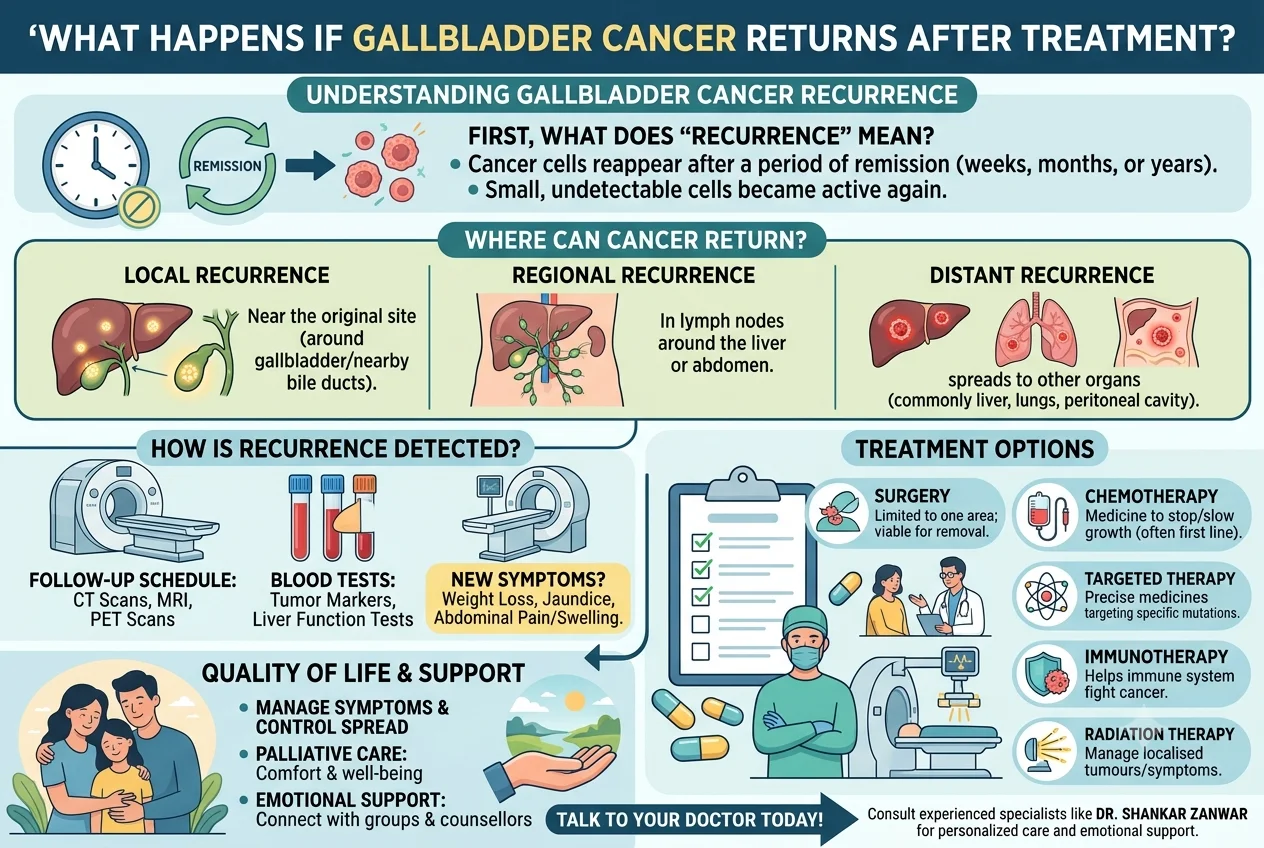
When we say gallbladder cancer has recurred, it simply means that cancer cells have reappeared after a period of remission, the phase where no cancer was detected in the body. This can happen weeks, months, or even years after initial treatment.
It does not mean the original treatment failed. It means that some cancer cells, too small to detect earlier, became active again over time.
Where Can Gallbladder Cancer Return?
Doctors typically classify recurrence in three ways:
Local recurrence — The cancer comes back near the original site, around the gallbladder area or nearby bile ducts.
Regional recurrence — Cancer reappears in the lymph nodes (small glands that are part of the immune system) around the liver or abdomen.
Distant recurrence — Cancer spreads to other organs, most commonly the liver, lungs, or the lining of the abdominal cavity (called the peritoneum).
Knowing where the cancer has returned helps doctors decide the best course of treatment.
How Is Recurrence Detected?
After gallbladder cancer treatment, most patients are placed on a regular follow-up schedule. During these check-ups, doctors typically use:
- CT scans or MRI scans to look for tumours
- Blood tests, including liver function tests and tumour markers
- PET scans are used in certain cases to detect activity in cancer cells
Symptoms that may prompt earlier investigation include unexplained weight loss, abdominal pain or swelling, jaundice (yellowing of the skin or eyes), or persistent fatigue.
What Are the Treatment Options?
When gallbladder cancer returns, treatment depends on where it has come back, how far it has spread, and the patient’s overall health. A specialist doctor will typically evaluate the situation and may recommend one or more of the following:
Surgery — If the recurrence is localised (meaning it’s limited to one area), surgery may still be a viable option to remove the tumour.
Chemotherapy — This uses medicines to stop or slow the growth of cancer cells. It is often the first line of treatment for recurrent gallbladder cancer, especially when surgery isn’t possible.
Targeted therapy — Some patients have specific changes in their cancer cells (called mutations) that can be treated with newer, more precise medicines that attack only those cells.
Immunotherapy — This treatment helps the body’s own immune system recognise and fight cancer cells. It’s increasingly used for gallbladder cancer, especially in combination with chemotherapy.
Radiation therapy — In some cases, targeted radiation may be used to manage localised tumours and reduce symptoms.
Each patient’s situation is different, and the treatment plan is always personalised based on individual factors.
What About Quality of Life?
This is a concern that doesn’t get discussed enough. Even when a cure isn’t possible, there is a great deal that modern medicine can do to manage symptoms, control the spread of cancer, and help patients live as comfortably as possible.
Palliative care, which focuses on comfort and quality of life rather than curative treatment, plays a very important role here. It’s not about giving up—it’s about living as well as possible while managing the illness, including symptoms from related conditions such as gallstones when they impact comfort and daily life.
Lean on Your Support System
A cancer recurrence can feel emotionally overwhelming for both the patient and the family. Connecting with a counsellor, a support group, or even other patients who have been through a similar experience can make an enormous difference.
Experienced specialists such as Dr. Shankar Zanwar understand that cancer care extends beyond medical treatment and involves addressing emotional, psychological, and practical concerns as well.
Talk to Your Doctor Today!
If you notice any new or returning symptoms between scheduled check-ups, don’t wait for your next appointment. Reach out to your doctor right away. Catching a recurrence early, even if treatment won’t be curative almost always leads to better outcomes and more options. Stay informed, stay connected with your care team, and know that you don’t have to face this alone.