What's the Best First Treatment to Try for IBS?
Introduction
If your stomach has been giving you trouble for a while — bloating, cramps, unpredictable bathroom trips — and your doctor has told you it’s IBS, you’re probably wondering: where do I even start with treatment?
Irritable Bowel Syndrome, or IBS, affects millions of people across India, and it can feel frustrating to manage because it looks different in every person. But here’s the reassuring part: IBS is very much treatable, and most people find significant relief once they identify the right approach for their body.
Let’s break down the best steps in IBS treatment in simple terms.
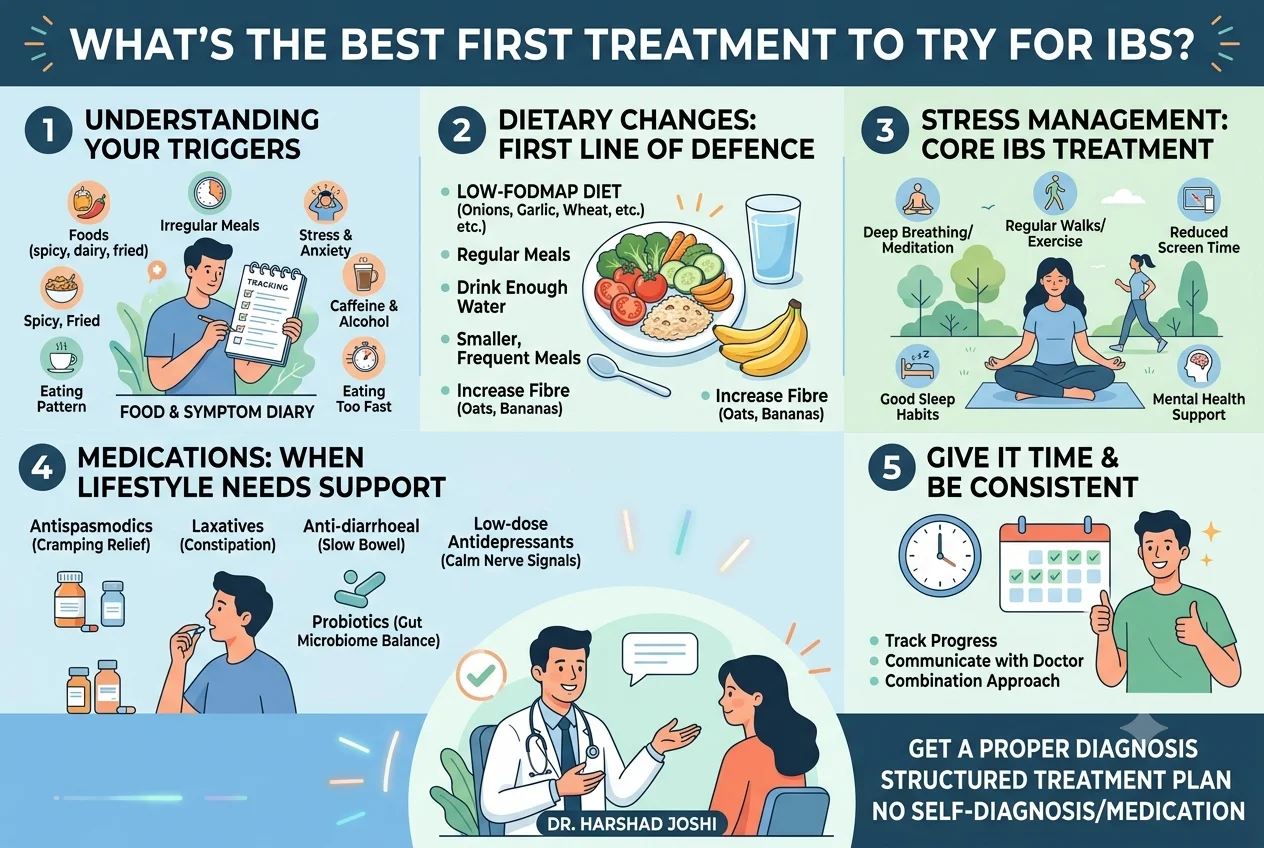
Start With the Basics: Understanding Your Triggers
Before any medication or therapy, the single most powerful first step is figuring out what’s making your symptoms flare up.
Common IBS triggers include:
- Certain foods like dairy, fried items, or spicy meals
- Irregular eating habits or skipping meals
- Stress and anxiety
- Caffeine and alcohol
- Eating too fast
Keeping a simple food and symptom diary for two to three weeks can reveal patterns you might never have noticed. It doesn’t have to be complicated; just jot down what you ate and how your stomach responded.
Dietary Changes: The First Line of Defence
Diet is almost always the first thing doctors recommend in IBS treatment, and for good reason. What you eat directly affects how your gut behaves.
The Low-FODMAP Diet is one of the most researched dietary approaches for IBS. FODMAPs are certain types of carbohydrates found in foods like onions, garlic, wheat, and some fruits that the gut finds hard to digest. Reducing these has helped many IBS patients feel noticeably better.
Other helpful dietary habits include:
- Eating at regular times every day
- Drinking enough water throughout the day
- Choosing smaller, more frequent meals over large ones
- Increasing fibre slowly, especially soluble fibre found in oats and bananas
It’s worth noting that dietary changes need a few weeks to show results, so patience is key.
Stress Management: More Important Than You Think
The gut and the brain are deeply connected, doctors call this the gut-brain axis. For IBS patients, emotional stress doesn’t just affect their mood. It directly triggers physical symptoms like cramping, bloating, and altered bowel habits.
This is why stress management isn’t optional, it’s a core part of IBS treatment.
Simple approaches that genuinely help:
- Regular walks or light exercise
- Deep breathing or meditation, even 10 minutes a day
- Good sleep habits
- Reducing screen time before bed
If anxiety or stress feels persistent and overwhelming, speaking to a mental health professional alongside your gastroenterologist can make a real difference.
Medications: When Lifestyle Changes Need Support
Sometimes diet and stress management alone aren’t enough, and that’s perfectly okay. Depending on whether your IBS leans towards constipation, diarrhoea, or a mix of both, doctors may recommend:
- Antispasmodics — medicines that relax the gut muscles and reduce cramping
- Laxatives — for IBS with constipation (the mild, gut-friendly kind)
- Anti-diarrhoeal medicines — to slow down bowel movements when needed
- Low-dose antidepressants — not for depression, but because they help calm overactive nerve signals in the gut
- Probiotics — live bacteria that help restore balance in the gut microbiome
No two IBS patients need the same combination, which is why a proper evaluation by a gastroenterologist is so important before starting any medication.
Don't Try to Manage IBS Alone
This is a point Dr. Harshad Joshi, a gastroenterologist with considerable experience in managing gut disorders, consistently emphasises — self-diagnosis and self-medication often delay effective treatment and sometimes make symptoms worse.
Getting a proper diagnosis, ruling out other conditions, and having a structured treatment plan tailored to your specific type of IBS is always the smarter path.
Give It Time, Be Consistent
IBS treatment rarely works overnight. The most effective approach is usually a combination — dietary changes, stress reduction, and targeted medication when needed — applied consistently over weeks and months.
Track your progress, communicate openly with your doctor, and don’t be discouraged by setbacks. Many people in Mumbai and across India go from daily discomfort to living completely normal, comfortable lives once they find the right treatment rhythm. Your gut deserves proper attention, and so do you.