Can IBS Go Away Permanently? What You Should Know
Introduction
If you’ve been dealing with a stomach that never seems to settle down, bloating one day, cramping the next, and a bathroom routine that keeps changing, you may have already heard the term IBS. And if you’ve been told you have it, the first question on your mind is probably the same one everyone asks: does it ever really go away? Let’s break this down in plain terms, along with what IBS Treatment in Mumbai actually looks like in practice.
What Exactly Is IBS?
IBS stands for Irritable Bowel Syndrome. In simple words, it’s a condition where your gut becomes more sensitive and reactive than usual. It’s not caused by damage or disease inside the intestines; scans and tests usually come back normal, but the gut still behaves unpredictably, causing discomfort, bloating, and irregular bowel habits.
Why Does IBS Happen?
There’s rarely one single cause. Instead, it’s usually a mix of factors working together:
- Stress and anxiety – The gut and brain are closely connected, so emotional stress often shows up as physical gut symptoms.
- Food triggers – Certain foods, like very oily meals, caffeine, or specific carbs, can set off symptoms in some people.
- Gut bacteria imbalance – The natural bacteria living in your intestines play a bigger role in digestion than most people realise.
- Past infections – Sometimes IBS symptoms begin after a bout of food poisoning or a stomach infection.
So, Can IBS Actually Go Away?
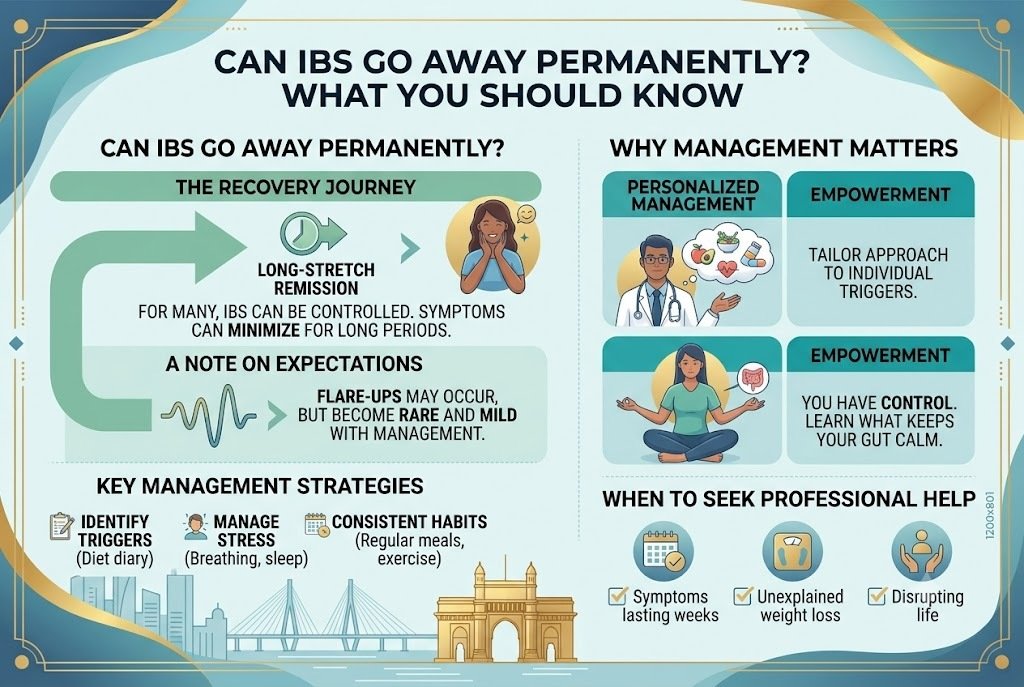
Here’s the honest answer: for many people, IBS isn’t something that disappears overnight, but it can absolutely go into long stretches of remission where symptoms barely show up at all. Some people find that once they identify their specific triggers and adjust their routine, the flare-ups become rare, mild, or stop altogether for years.
It’s less about a one-time cure and more about learning what keeps your gut calm. And that’s genuinely good news, because it means you have real control over how you feel day to day.
What Helps Most People
When it comes to IBS Treatment in Mumbai, doctors usually recommend a combination approach rather than a single fix:
- Dietary adjustments – Identifying and reducing trigger foods, often with the help of a structured elimination approach.
- Stress management – Simple practices like walking, breathing exercises, or better sleep can noticeably reduce flare-ups.
- Medication when needed – for symptom relief during difficult phases, based on whether diarrhoea, constipation, or cramping is more dominant.
- Probiotics – Some people find relief by supporting healthy gut bacteria, though this varies from person to person.
Dr. Shankar Zanwar often points out that IBS management works best when it’s personalized to the individual; what calms one person’s gut may not work for another, which is why guesswork rarely helps in the long run.
When Should You See a Doctor?
Not every stomach upset needs a specialist, but certain signs are worth getting checked:
- Symptoms lasting more than a few weeks
- Unexplained weight loss
- Blood in stool
- Symptoms that disrupt daily life or sleep
Dr. Shankar Zanwar recommends getting a proper evaluation before assuming it’s “just IBS,” since a few other gut conditions can mimic similar symptoms and are worth ruling out first.
Everyday Habits That Make a Real Difference
- Eat meals at consistent times instead of skipping and overeating later.
- Keep a simple food and symptom diary to spot your personal triggers.
- Stay hydrated and don’t rush meals.
- Build in some form of daily movement, even a short walk helps.
IBS can feel frustrating, especially on bad days, but it’s rarely something you have to just live with silently. With the right guidance and a bit of patience, most people find a rhythm where the gut settles down and stays that way for long periods.