
How Can You Take Control of Irritable Bowel Syndrome? 5 Self-Care Tips
Introduction
If your stomach seems to have a mind of its own, bloating after meals, sudden cramps, or trips to the bathroom that just won’t wait, you’re not alone. This is the daily reality for millions of people living with Irritable Bowel Syndrome, or IBS.
Here’s the good news: IBS isn’t something you just have to “live with” helplessly. While it doesn’t have a permanent cure, the right IBS treatment approach, combined with a few consistent lifestyle habits, can make symptoms far more manageable, sometimes even rare.
Let’s talk about what actually helps.
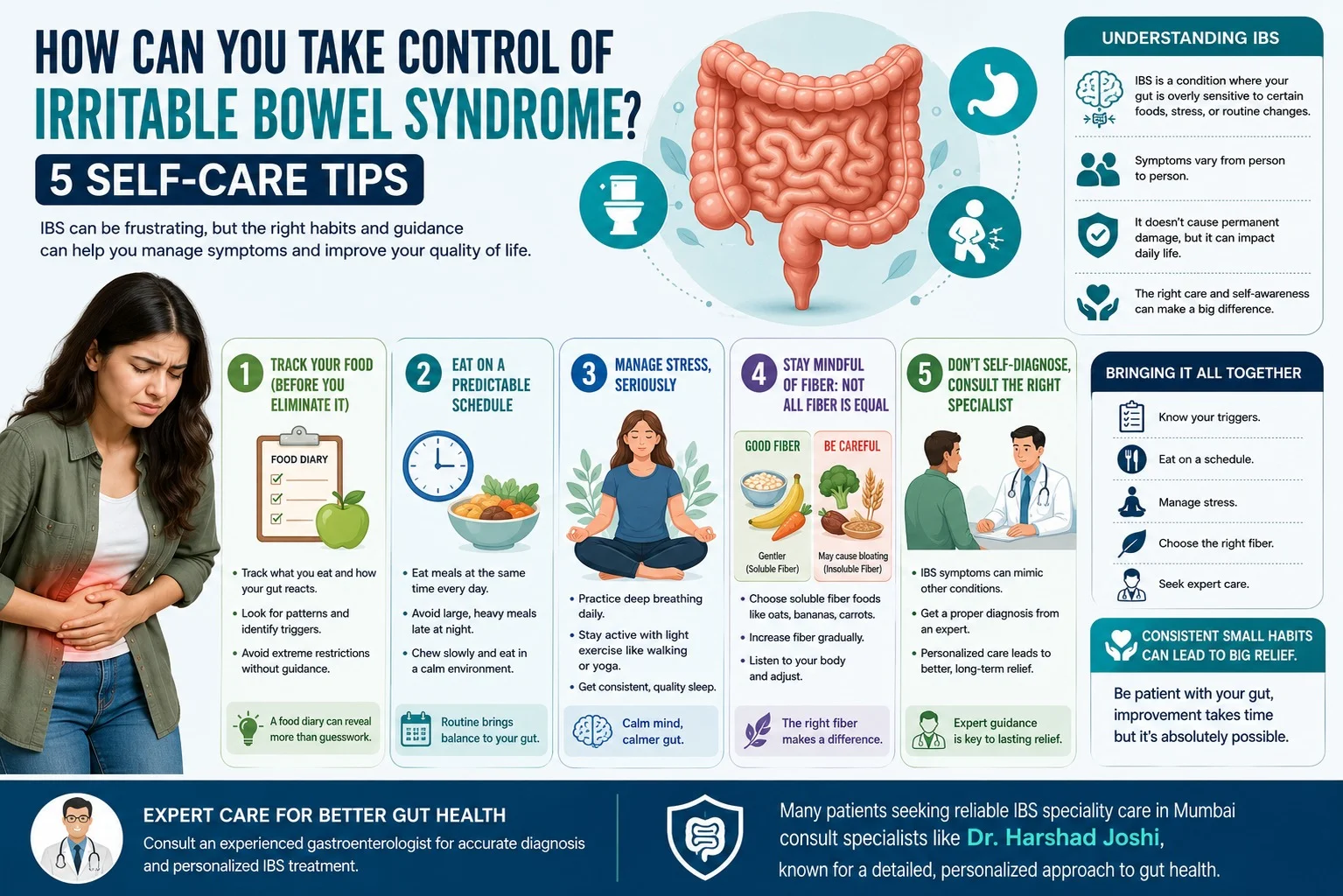
First, What Exactly Is IBS?
In simple terms, IBS is a condition where your gut becomes overly sensitive. Your digestive system works fine structurally; there’s no damage or disease, but it reacts strongly to things that wouldn’t normally cause a problem: certain foods, stress, hormonal shifts, or even changes in routine.
That’s why two people with IBS can have completely different triggers. One person’s “safe” food might set off another person’s symptoms entirely.
Because of this variability, self-care plays a huge role in managing IBS day-to-day, alongside proper medical guidance.
5 Self-Care Tips That Actually Make a Difference
1. Track Your Food (Before You Eliminate It)
Before cutting out entire food groups, spend two to three weeks simply noting what you eat and how your gut reacts afterward.
- Keep a simple diary: meals, timing, and symptoms.
- Look for patterns; common triggers include dairy, fried foods, caffeine, and artificial sweeteners.
- Avoid extreme restriction without guidance; it can lead to nutrient gaps
This step alone helps many people identify their personal triggers faster than guessing ever could.
2. Eat on a Predictable Schedule
Your gut loves routine. Irregular eating times, skipping meals, or eating very late at night can confuse your digestive rhythm and worsen symptoms.
Try to:
- Eat meals around the same time daily
- Avoid large, heavy meals late in the evening
- Chew slowly and avoid eating while stressed or distracted
Small, consistent habits here often bring noticeably calmer digestion within a few weeks.
3. Manage Stress, Seriously
Here’s something a lot of people don’t realize: your gut and brain are directly connected. Stress doesn’t just affect your mood, it can trigger real, physical IBS flare-ups.
Simple stress-management habits that help:
- Deep breathing for 5-10 minutes daily
- Regular light exercise like walking or yoga
- Getting consistent, quality sleep
You don’t need to eliminate stress, just manage it enough that it isn’t constantly triggering your gut.
4. Stay Mindful of Fiber: Not All Fiber Is Equal
Fiber is often recommended for gut health, but with IBS, the type of fiber matters more than the amount.
- Soluble fiber (oats, bananas, carrots) tends to be gentler on the gut
- Insoluble fiber (raw vegetables, whole grain skins) can sometimes worsen bloating for sensitive individuals
- Increase fiber gradually; sudden jumps can backfire
A slow, thoughtful approach here works better than rushing into “high-fiber diets” overnight.
5. Don't Self-Diagnose, Consult the Right Specialist
This might be the most important tip of all. IBS symptoms can overlap with other conditions, so getting a proper diagnosis matters before assuming it’s “just IBS.”
Consulting an experienced gastroenterologist ensures your treatment plan is actually built around your specific triggers and symptom pattern, not generic advice found online.
Many patients seeking reliable IBS speciality care in Mumbai consult specialists like Dr. Harshad Joshi, known for taking a detailed, personalized approach to gut health, looking beyond just symptoms to understand the root cause behind each patient’s IBS.
Bringing It All Together
Managing IBS isn’t about one single fix; it’s about consistency across small habits: knowing your triggers, eating on a schedule, managing stress, choosing the right fiber, and getting expert guidance when symptoms persist.
With the right combination of self-care and proper IBS treatment, most people find their symptoms become far more predictable and far less disruptive to daily life.
Give your gut some patience. Real improvement usually builds gradually, not overnight, but it does build.