What Should You Do and Avoid During Recovery After Liver Transplant Surgery?
Introduction
Going through a Liver Transplant is a big milestone, and honestly, the recovery period matters just as much as the surgery itself. The first few months set the tone for how well your new liver settles in and how quickly you get back to living life on your own terms. So let’s talk plainly about what helps recovery along, and what tends to slow it down.
Right After Surgery: What to Expect
The first couple of weeks are usually spent in the hospital under close watch. Your medical team will track how well your body is accepting the new liver, adjust your medicines, and keep an eye out for any early complications. It can feel like a lot is happening at once, but this stage is really about giving your body the space and support it needs to start healing.
Once you’re home, recovery continues for several months, and this is where your daily choices start to matter a lot more.
What You Should Do During Recovery
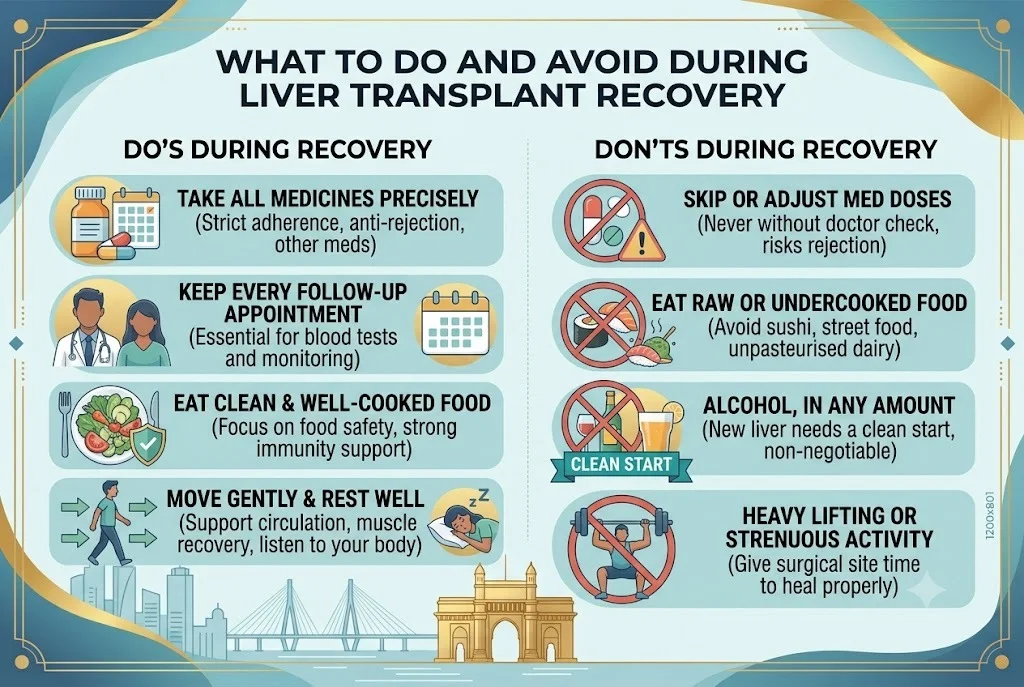
- Take your medicines exactly as prescribed. Anti-rejection medicines are non-negotiable; missing doses, even occasionally, can put your new liver at risk.
- Keep every follow-up appointment. Regular blood tests help your liver transplant doctor catch small issues before they turn into bigger ones.
- Eat clean, well-cooked food. Your immune system is intentionally kept lower right after surgery, so food safety matters more than usual.
- Rest, but move gently. Short walks help blood circulation and muscle recovery, even if you’re still feeling tired.
- Track your symptoms daily. Keeping a simple log of how you feel, your temperature, and any changes makes conversations with your doctor much easier.
- Stay in touch with your support system. Recovery is physical, but it’s emotional too — having people around you genuinely helps.
What to Avoid During Recovery
- Skipping or adjusting medication doses on your own. Even if you feel fine, never change your medicine schedule without checking with your doctor first.
- Raw or undercooked food. Sushi, unpasteurised dairy, and street food are best avoided while your immunity is still recovering.
- Alcohol, in any amount. This one isn’t negotiable after a Liver Transplant — your new liver needs a completely clean start.
- Crowded or unhygienic spaces early on. Until your doctor gives the go-ahead, it’s wise to steer clear of large gatherings where infections can spread easily.
- Heavy lifting or strenuous activity. Give your surgical site proper time to heal before pushing your body physically.
- Ignoring small symptoms. A mild fever or unusual fatigue might feel minor, but it’s always worth mentioning to your care team.
Why Staying Connected With Your Liver Transplant Doctor Matters
Recovery isn’t something you navigate alone, and it shouldn’t be. Your liver transplant doctor is tracking things you simply can’t monitor yourself, liver function levels, signs of rejection, medicine interactions, and how your body is adapting overall. Skipping appointments because you’re “feeling fine” is one of the most common and avoidable mistakes people make.
Think of these check-ins less like a formality and more like a routine tune-up that keeps everything running smoothly behind the scenes.
Warning Signs to Watch For
Reach out to your doctor promptly if you notice:
- Yellowing of the skin or eyes
- Persistent fever
- Unusual swelling, especially around the abdomen
- Dark urine or pale stools
- Ongoing nausea or loss of appetite
These aren’t meant to alarm you, they’re simply signals your body sends when something needs attention, and catching them early almost always leads to a smoother resolution.
Getting Back to Normal Life
Most people gradually return to work, travel, and regular routines within a few months, though the exact timeline depends on your overall health and how surgery went. Patience really is the key ingredient here. It’s tempting to rush back into old habits once you start feeling better, but giving your body the full recovery window pays off in the long run.
A Liver Transplant is a fresh start in every sense. With the right habits, consistent follow-ups, and a little discipline in the early months, most people go on to live full, active lives with their new liver functioning well for years to come.