What Should I Know Before Getting My Gallbladder Removed?
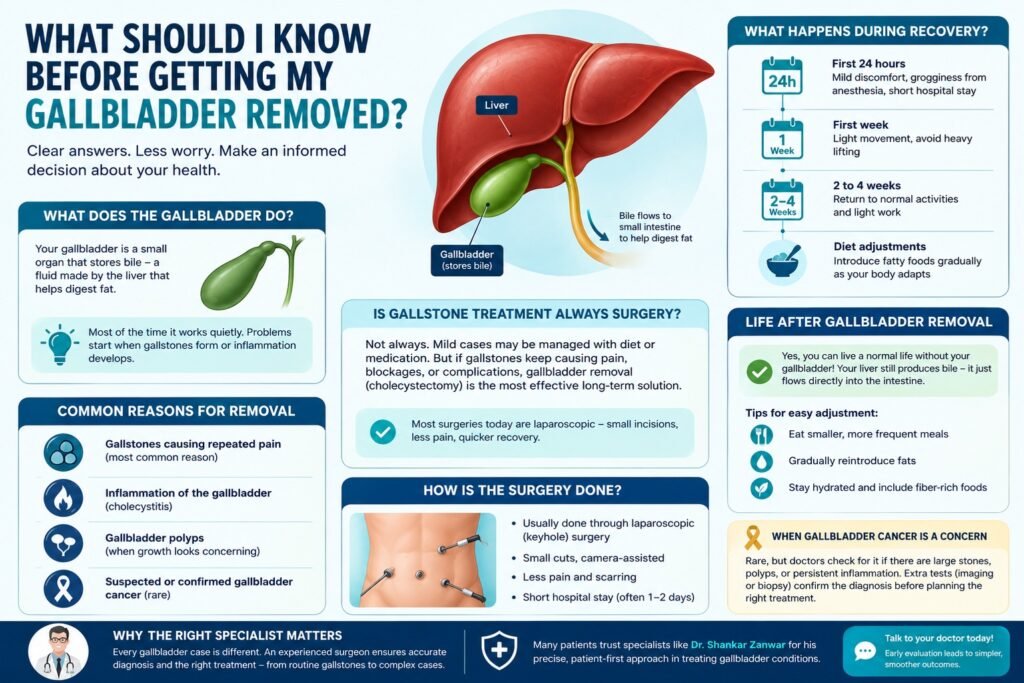
What Should I Know Before Getting My Gallbladder Removed? Introduction So your doctor has recommended gallbladder removal, and naturally, your mind is racing with questions. Will it hurt? How long is recovery? Can you live normally without a gallbladder? These are all fair concerns, and honestly, most people feel the same way before the procedure. Let’s walk through everything you should actually know, in plain, simple terms, before going ahead with surgery. Why Is the Gallbladder Removed in the First Place? Your gallbladder is a small organ that stores bile, a fluid that helps digest fat. Most of the time, it works quietly in the background, and you never think about it. Problems start when gallstones form, small, hard deposits that block bile flow and cause pain, especially after fatty meals. In some cases, doctors may also recommend removal due to chronic inflammation or, in rare situations, due to gallbladder cancer. The right approach depends entirely on what’s causing your symptoms, which is why proper diagnosis matters before jumping to conclusions. Common Reasons for Removal Gallstones causing repeated pain (the most common reason by far) Inflammation of the gallbladder, often linked to blocked bile flow Gallbladder polyps that show concerning growth patterns Suspected or confirmed gallbladder cancer, though this is far less common If your doctor mentions cancer as a possibility, try not to panic immediately; further tests are usually done first to confirm before deciding on the treatment path. Is Gallstone Treatment Always Surgery? Not necessarily. For mild or occasional symptoms, doctors sometimes start with dietary changes or medication. But if gallstones keep causing pain, blockages, or complications, surgical removal (called a cholecystectomy) is usually the most effective long-term solution. Here’s something reassuring: this is one of the most commonly performed surgeries worldwide, and most cases are handled through minimally invasive, laparoscopic methods, meaning small incisions, less pain, and quicker recovery compared to older surgical techniques. What Happens During Recovery? Recovery timelines vary, but here’s a general idea: First 24 hours – Mild discomfort, some grogginess from anesthesia, short hospital stay (often just a day or two) First week – Light movement is encouraged, but heavy lifting and strenuous activity should wait 2 to 4 weeks – Most people return to normal daily activities and light work Diet adjustments – Fatty and heavy meals may need to be introduced gradually as your body adapts to digesting without a gallbladder. Most people are surprised at how quickly they bounce back, especially with laparoscopic surgery. Life After Gallbladder Removal A common question: “Can I live a normal life without my gallbladder?” Yes, absolutely. Your liver continues producing bile even without the gallbladder; it just flows more directly into your digestive system instead of being stored. Some people notice mild digestive adjustments initially, especially with very fatty or oily foods, but this usually settles within a few weeks to months. A few practical tips for the adjustment phase: Eat smaller, more frequent meals initially Gradually reintroduce fats rather than jumping back in all at once Stay hydrated and include fiber-rich foods to support digestion When Gallbladder Cancer Is a Concern While rare, gallbladder cancer is something doctors stay alert to, especially in cases involving large or unusual gallstones, polyps, or persistent inflammation. If cancer is suspected, additional imaging and sometimes a biopsy are done to confirm before deciding the right gallbladder cancer treatment approach, which may involve more extensive surgery depending on the stage. This is exactly why choosing the right surgical specialist matters: someone who can accurately assess your case rather than treating every gallbladder issue the same way. Why Getting the Right Specialist Matters Not all gallbladder cases are the same; some are straightforward, while others need a more careful, experienced approach, particularly when cancer risk is part of the picture. Patients often prefer consulting an experienced specialist like Dr. Shankar Zanwar, known for his precise, patient-first approach in evaluating and treating gallbladder conditions, from routine gallstone cases to more complex situations requiring advanced surgical expertise. Talk to Your Doctor Today! Gallbladder removal might sound intimidating at first, but for most people, it’s a well-established, safe procedure with a relatively quick recovery. Understanding why it’s needed, what to expect, and how your body adjusts afterward can make the entire experience far less stressful. If you’re dealing with persistent gallstone symptoms or have concerns about a diagnosis, don’t wait it out silently; getting evaluated early usually leads to simpler, smoother treatment outcomes.